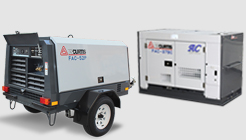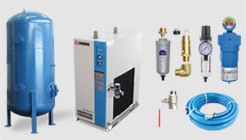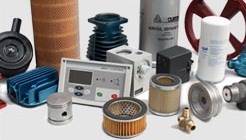
Glenco Air & Power is proud to provide a selection of the best reciprocating air compressors on the market.
We provide only premium products with genuine components and proven longevity, and with a number of models and optional extras for each brand, we’ve got the right reciprocating compressor to suit your application.
No matter whether you choose from the premium quality Airmac range or the dependable Puma range, you’re guaranteed to get a high-quality product that meets your requirements. Browse our product ranges, and remember that our extensive network of authorised dealers is available to provide expert advice and stellar after-sales customer support.
-
Premium Quality
The Airmac range offers one of the best selections of belt-drive reciprocating air compressors for heavy-duty operations, including the 240 Volt and 415 Volt electric models, Honda petrol engine-powered range, Yanmar diesel engine-powered range, and the multi-function series.
-
Dependable Performance
The Puma range is renowned for its reliability and performance, including the 240 Volt and 415 Volt electric models, Honda petrol engine-powered range, Yanmar diesel engine-powered range, and the 415 Volt Silent series.
What are Reciprocating Air Compressors?
In a reciprocating air compressor, air is compressed by a piston driving it down a crankshaft. This is why they’re also often known as ‘piston compressors’. These belt-driven compressors enable users to adjust speed and power according to their applications.
Kinds of reciprocating compressors
There are two main kinds of compression technology in reciprocating compressors: single-stage (A-Series) and two-stage (B-Series).
Two-stage reciprocating compressor (B Series)
Compression delivered using two chambers, suitable for higher compressions and heavy-duty use.
Single-stage reciprocating compressor (A Series)
Compression is delivered in one stroke, best for lower compressions and lighter, intermittent use.
Main Applications
A reciprocating air compressor is best suited across a variety of applications: you’ll find them in workshops, factories and construction sites where compressed air is needed sporadically. This might include:
- Food and beverage manufacturing: providing compressed air during the packaging and processing process
- Spray painting rigs: For effective and smooth paint application
- Auto manufacturing and workshops: For tyre inflation, assembly, and even cleaning
- Construction: Providing a reliable compressed air supply for relevant tools and machinery
Considerations to keep in mind when choosing reciprocating air compressors:
High-pressure performance
Reciprocating compressors generally produce higher pressures than their rotary screw counterparts.
Efficiency
Reciprocating compressors can produce high pressures from less energy input; their design lets them compress air in bursts rather than continuously. They’re more efficient for intermittent applications, whereas rotary screw compressors are considered more efficient for continuous use.
Durability
Versatility and flexibility – oil-flooded reciprocating compressors typically adapt to different applications and uses.
Value and upfront cost
Reciprocating compressors tend to have a lower upfront cost and attract lower maintenance costs than rotary screw compressors.
Maintenance
Reciprocating compressors are generally easier to maintain and repair with minimal professional servicing.
Frequently Asked Questions
When should I opt for a single-stage compressor over a two-stage compressor?
Choose a single-stage air compressor for less demanding tasks – think of inflating tyres, powering small tools. If it requires continuous flow, a two-stage compressor is going to be the more efficient option.
How should I decide the right size reciprocating air compressor for my applications?
Variables including the airflow and pressure required for the applications, the available power source, and frequency of usage are just some of the essential factors that must be taken into consideration when choosing the right capacity for your needs.
When should I opt for a reciprocating air compressor over a rotary screw compressor?
Reciprocating compressors are designed for high-pressure, short-term applications. They can deliver short bursts of high air pressure with great efficiency and only a small footprint in terms of energy and size. Your rotary screw compressor is a better fit for conitnuous use and is the pick for industrial applications.
How do I look after my reciprocating air compressor after I've purchased it?
These air compressors are relatively simple to maintain, but it’s always a good idea to keep an eye on their operation and appearance. You might need to replace air filters or change lubrication to prevent excessive friction, but outside of ensuring its cooling system is working properly and checking for signs of wear and tear, reciprocating compressors are pretty durable.
Let’s power your business
Need help choosing a compressor, portable power system, or other related equipment for your operations? Our team is ready to help. Contact us today or find your nearest Glenco dealer.